
I don’t know anything about cars. Somehow that’s become my problem.
In no way, shape, or form am I a car person.
 Ok ok, I still stand by what I said. I’m not a car person, I’m a fake. A fraud. Don’t look at me that way please.
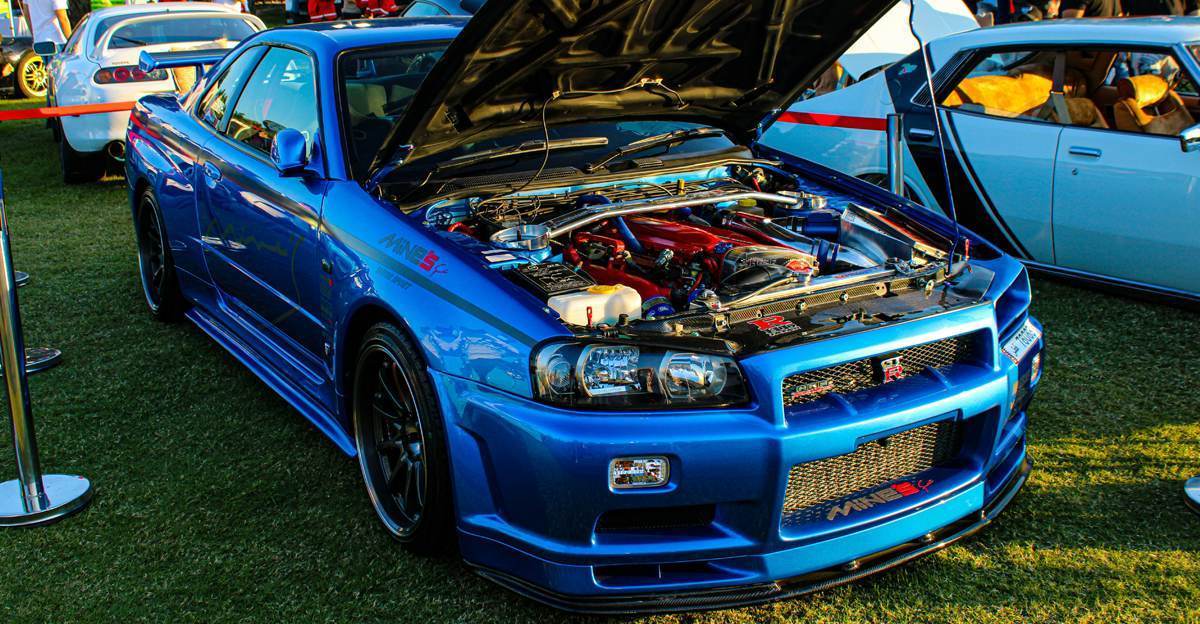
I’m not completely useless, I know some things about cars. I know they go brum. I know most have four wheels with four tyres attached. And yes, I know that if you drive with your clutch down for too long you can burn it out. (From experience, don’t ask.) But I genuinely, honestly, hand on heart do not know anything about cars, which makes it worse when I tell you my boyfriend is a mechanic. I once said I liked “the silver one” at a car show when someone asked my opinion, and they looked at me the way you look at someone who has just referred to a Nissan GT-R as “the silver one.” My partner has never fully recovered. Neither have I, if I’m honest.
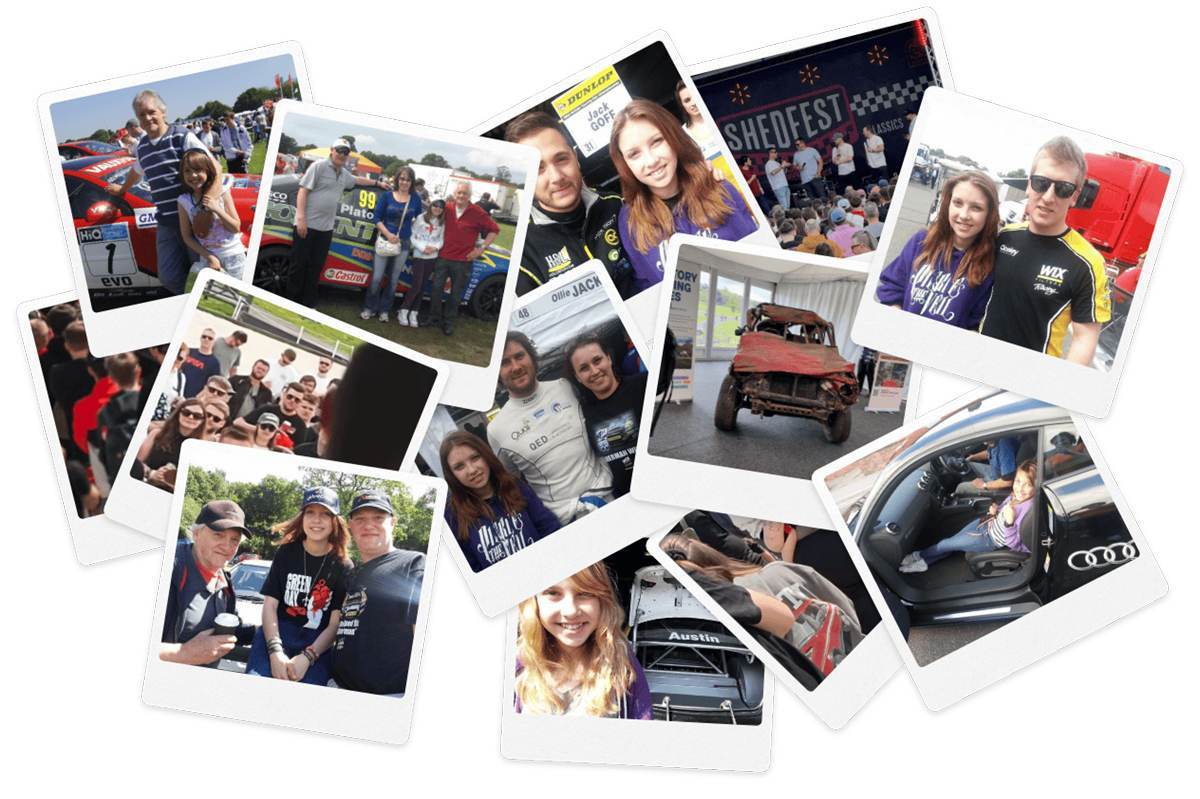
And yet somehow, through a combination of parents who love cars, grandparents who love cars, a partner who loves cars, a partner’s friends who love cars, and what I can only describe as geographic bad luck, I have been to more car shows in the last few years than most people go to in a lifetime. Eighteen, at last count. Eighteen.
The turning point
Here’s the thing they don’t warn you about, though. Somewhere around show six or seven, something shifts. You stop looking at the cars and you start looking at everything else. The people. The energy. The way someone has displayed their pride and joy like it’s an artwork, because it is. The sense of occasion.
And then you start looking at the design.
Once you start, you genuinely cannot stop. I mean it. You cannot stop. Everything becomes a critique. Every poster, every sticker, every leaflet, every hand-lettered sign, every font choice on every banner, every logo on every gazebo. My brain just does it now, automatically, before I’ve had a chance to consent. I am standing in a field looking at a 1993 Honda Civic and I am thinking about kerning. Someone please find me the Men in Black memory eraser so I can go back to a simpler time when I didn’t know what kerning was.
The word document on the windshield
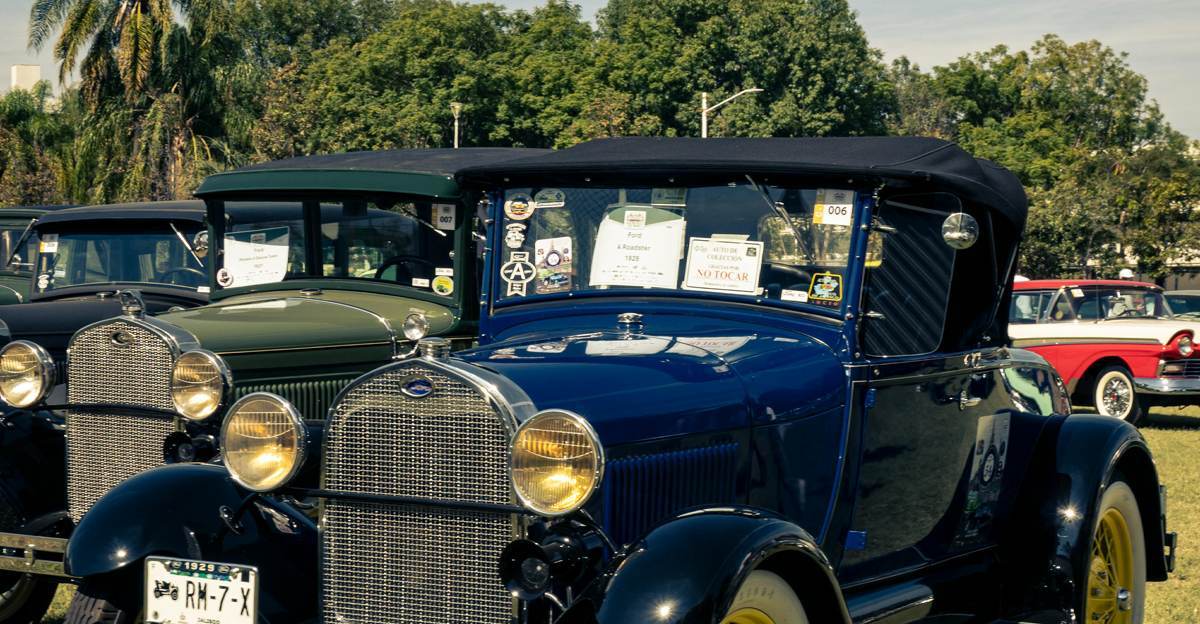
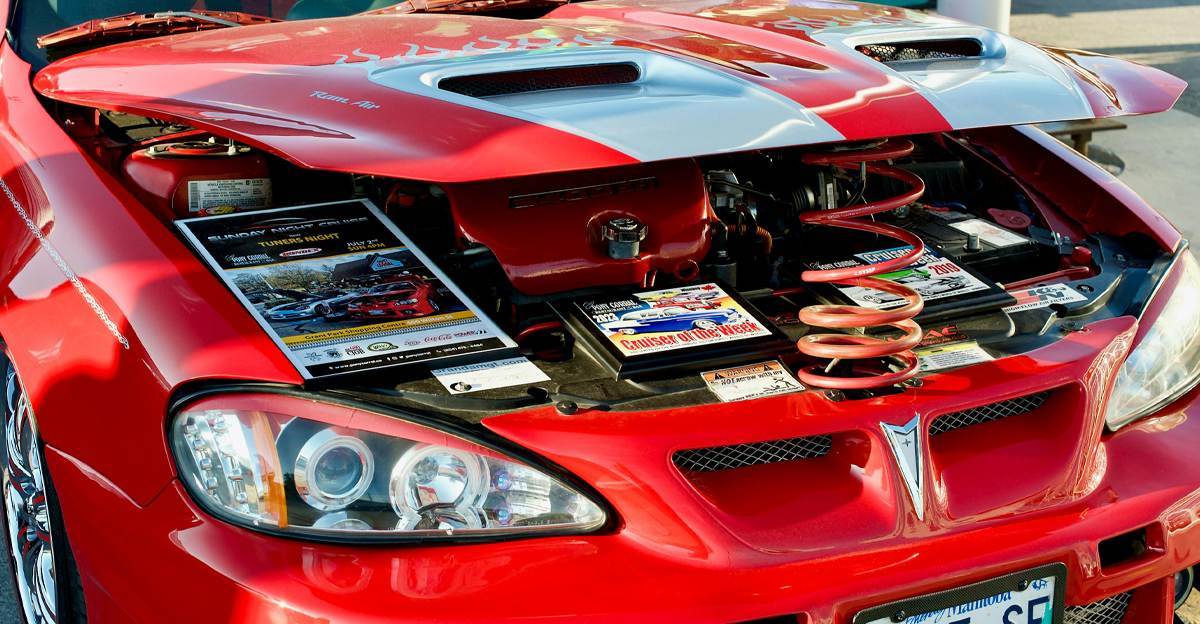
Last year, my partner and I were walking around a show and we spotted it. A car, genuinely lovely car, clearly someone’s everything, with a printed sheet of A4 tucked under the wiper. White page, black text, nine point font, five paragraphs, no margins. The full history of the car. The work that had gone into it. The story behind it.
And the person who owned it cared so much. You could feel it in every single word.
The chickening out
My partner and I made eye contact at exactly the same moment. The same silent conversation happened in about half a second. Someone should help them. We could help them. Why haven’t we helped them? We should go over and help them.
Did we go and help them? Big fat nope. I chickened out completely, and honestly there’s a practical reason on top of the cowardice, which is that at car shows you can never be entirely sure who owns a car because the owners wander around too. They’re off looking at everyone else’s pride and joy, same as you. So you can’t exactly touch someone’s car, the one thing you should absolutely never do at a car show, to leave a handwritten note saying “call me for design help.” That is not a good first impression. That is how you become a story someone tells at the next show.
So I stood there, said nothing, and walked away with my hands in my pockets and my designer brain absolutely screaming.
But I thought about that A4 sheet for weeks. Not with any kind of judgment, I don’t have that in me for someone who loves something that much. With the very specific frustration of a designer who can see exactly what a thing could be, and is standing there doing absolutely nothing about it.
Maybe I should actually make business cards.
It’s not just that one car
And here’s the thing about that A4 sheet. It’s not unusual. It’s actually the norm. Most people at car shows don’t design anything beyond the car itself. The car is the project. The car gets all the love and all the hours and all the money. And then when it comes to presenting it to the world, they print out a Word document because nobody told them there was another option, and also they’ve already spent all their money on the car, which honestly is the correct priority.
What car show design actually looks like (all of it)
Here’s the spectrum, and it is genuinely a spectrum.
The A4 sheet end of the spectrum
On one end you have your A4 sheet. Plain. Functional. Full of love in the words if not the formatting. No judgment, we’ve been through this, but also, we could do better.
On the other end you have the Catmobile. I promise that’s a real thing I have seen with my own eyes. A car completely covered in orange fuzz, with a tail, ears, and whiskers. Next to it, a mini remote control car that was an exact replica of the real one. The whole setup had a totally committed visual identity, a concept, a colour palette, a brand, basically, that they had arrived at entirely by instinct and executed with complete confidence. I thought it was brilliant. I also thought, that person didn’t need me. They had it handled.
The thing is, the overdesigned maximalist chaos that would be a complete disaster in corporate work actually makes total sense here. Car culture isn’t minimalist. It’s not a tech startup. It’s not asking to be stripped back and made clean. The loud, layered, reference-heavy, sticker-covered aesthetic is the point. It’s supposed to feel like a lot. That IS the brand. The mistake isn’t being too much, the mistake is being too much with no intention behind it. The instinct is there. It always is. It just doesn’t always make it as far as the windshield.
From car parks to proper festivals
And then there’s the small car meets, which are a different thing entirely. The local ones, the ones that move between car parks and industrial estates and fields, those are usually promoted on social media with the same poster every single time. Same template, same layout, just the date and location changed. Sometimes badly. Sometimes in a font doing nobody any favours. Sometimes an AI-generated image that blends into the forty seven other AI-generated car show posters that week, and your eye just slides right off it. Car people don’t fully care about design the way I do, which is completely fine and normal, but it does mean that when the design is actually good it stands out in a way that’s almost startling.
The bigger festival-style shows are a different world. Proper branding, real event identity, the full thing. I also once walked past a stall at one of the longer shows that I still think about. A vendor doing live design and print, on the spot. You walked up, sent them a photo of your car and some information about it, and they designed and printed you a personalised car show display board while you wandered around. I didn’t stop because I was in motion and had lost my partner in the crowd, standard. But I clocked it. The idea of someone commissioning their own designed display for their car, that day, at the show, is exactly the kind of thing that makes me think the appetite for this stuff is bigger than people realise.
The sticker economy (this is a whole thing)
I need to talk about the stickers. Because the stickers deserve their own section.
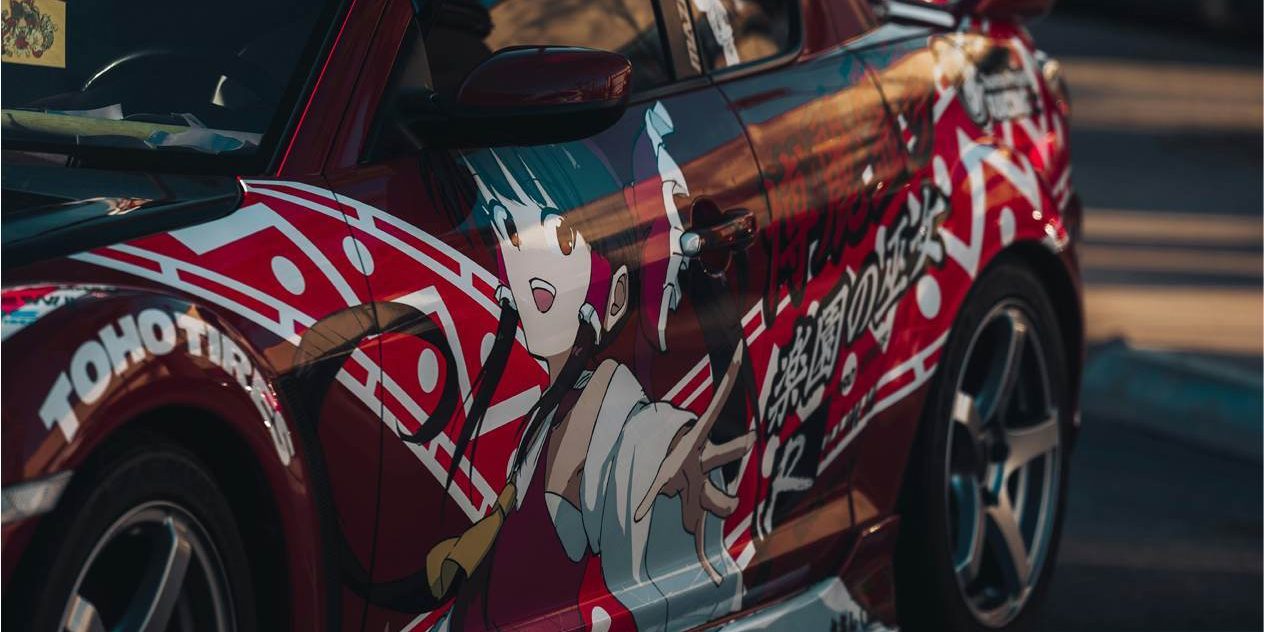
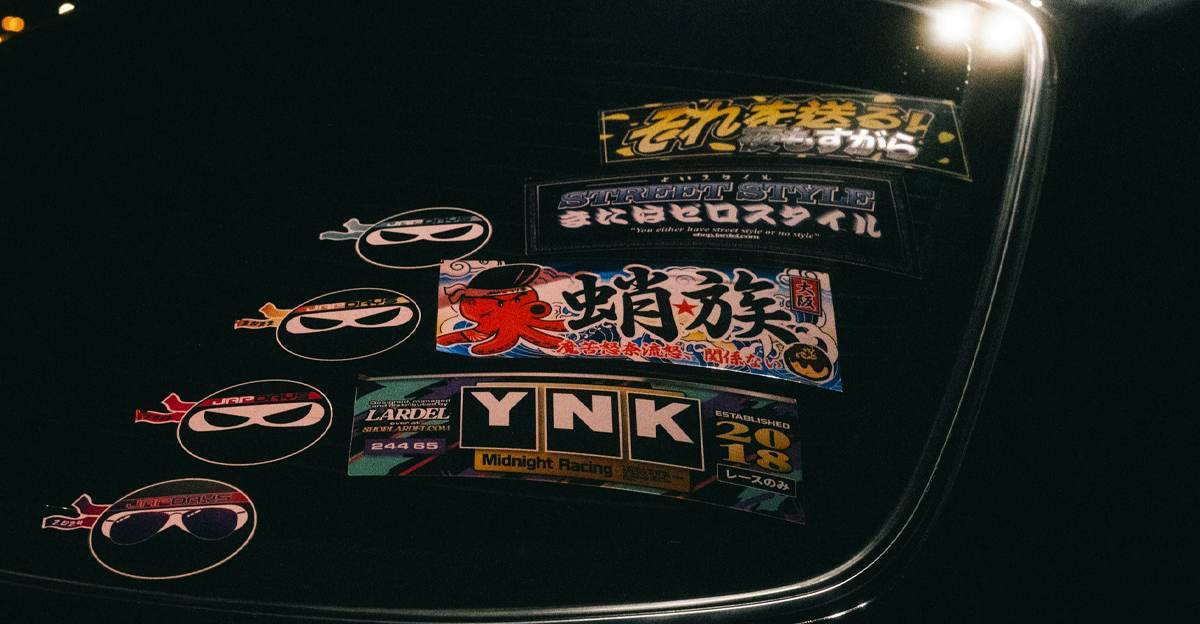
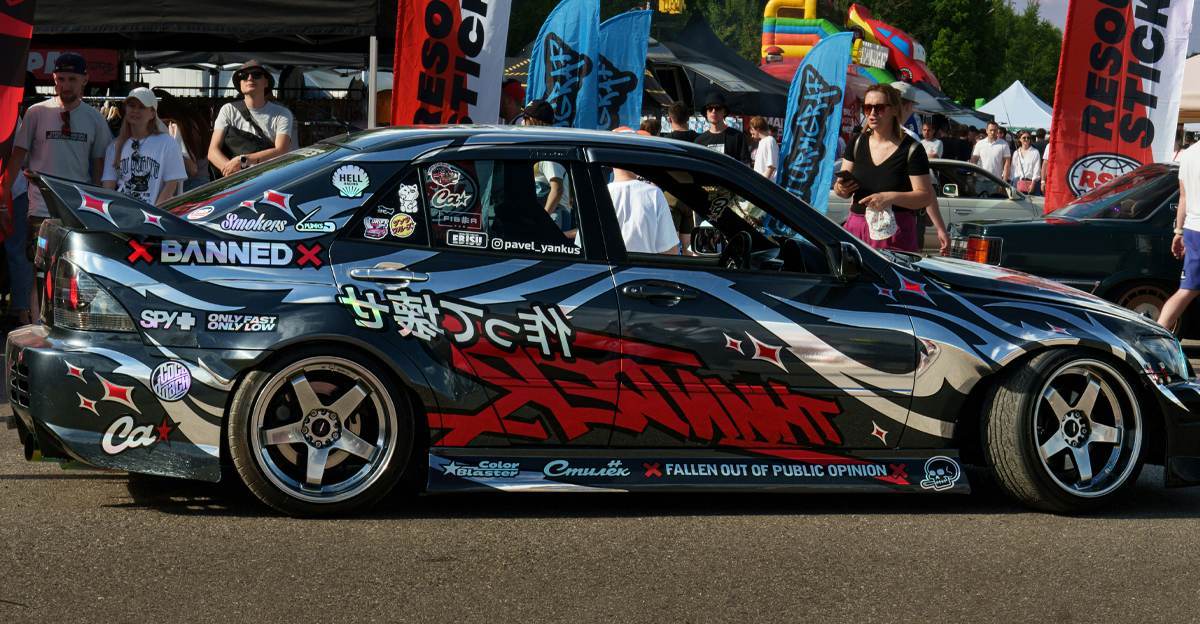
Car sticker design is its own language, and if you’re not fluent you will stand there looking at a back window like I looked at that GT-R and say something embarrassing. The vocabulary involves JDM-style graphics (Japanese domestic market, clean lines, kana lettering, very specific energy), stance culture aesthetics, drift imagery, turbo gauges rendered as actual art, and an enormous amount of anime and copyrighted characters that we are all collectively agreeing not to look at too hard.
A theory I’ve spent too long on
Which brings me to a question I’ve spent a frankly embarrassing amount of time thinking about. Why is car culture so deeply, consistently, joyfully anime-adjacent?
My working theory: Initial D. Tokyo Drift. The entire mythology around Japanese street racing that embedded itself into Western car culture and never left. Everyone can agree Tokyo Drift is the best Fast and Furious film, other than the first one with Brian, obviously, not any of the recent ones, the recent ones have gone fully unhinged in a way that is fun but has absolutely nothing to do with cars anymore. The point is, the Japanese street racing aesthetic got in, turned out to be genuinely beautiful, and nobody’s asked it to leave since. Good. It shouldn’t leave. It’s doing great things.

The hoodies (I need to specifically mention the hoodies)
Car show merch occupies this fascinating design space where almost anything goes, as long as it feels right. A novelty gear stick keyring shaped like a GT-R shifter. A decorative number plate, not for the car, for your bedroom door or your boot shelf, which I find extremely endearing. Enamel pins. Charmander keychains. Sonic. Rick and Morty. Whatever anime is big that weekend. A Walking Dead reference on a car accessory that somehow makes complete sense. You are not designing for a demographic. You are designing for a feeling. And the feeling is: I love cars, I love a bit of culture, make me smile. That’s a design brief most people would kill for.
And then there are the hoodies. Car people love a Japanese-style graphic hoodie in a very specific and committed way. You know the ones. Bold kanji, clean illustration, deep colourway, the kind of thing that looks like it could be a limited-edition streetwear drop but you actually got it from a stall next to a man selling chrome exhaust tips. They are genuinely cool. I have wanted several. I haven’t bought any because I’m not sure I’ve earned them yet. Fake car person status only takes you so far, and I think the hoodie is where they check your credentials.

The ten year old with the Canon camera
There’s something else I want to mention because it genuinely stopped me in my tracks the first time I noticed it.
Photography and videography at car shows is massive. And I don’t mean the official event photographer wandering around with a press pass. I mean the community itself. Children as young as ten sat on the floor with expensive Canon cameras, getting the angle, editing on their phones, posting the same day. I’ve looked at some of those accounts and thought, genuinely, that is a professional level image. Sharp, composed, the light doing exactly the right thing. And then you click through to their profile and the bio says something like “just an 11 year old who loves cars and taking pictures.”
At that point you feel a very specific kind of embarrassed, because you are a professional graphic designer, and you took a photo for your partner on your iPhone 15 Pro Max and it came out blurry somehow. Meanwhile my partner takes a photo of his car on his iPhone 12 and it looks like Michelangelo took it. I don’t know how. I don’t want to talk about it.
The visual side of car culture is taken seriously by the people in it, even when they’re eleven. The eye is there. It always has been.
What good car show design actually does
Here’s the thing I’ve landed on after eighteen shows and entirely too much time in car parks thinking about this.
Nobody shows up to a car show for the leaflets. Obviously. They come for the cars, the community, the excuse to stand outside with a coffee and talk to strangers about horsepower. The leaflet is not the main event.
But here’s what a good leaflet actually is. It’s a memory. It’s the thing you take home, or photograph, or stick on your fridge, or hand to someone else and say “look at this car I saw.” It’s the thing that keeps the car in someone’s head after the show ends and the car park empties. A sticker someone takes home and puts somewhere is your car living in their house. A well-designed show board photograph ends up on someone’s Instagram and their followers ask where the show was.
The car is the passion project. The design around it is how that passion travels beyond the show.
And the gap between what some people put out and what they could put out isn’t about budget or skill or time. It’s just that nobody’s offered to help. Nobody’s handed them a better option and said, this is what your car deserves, because it deserves more than nine point font and no margins.
I keep thinking about that. Show after show. Hands in pockets. Brain screaming.
The part where I actually say the thing
If you’ve ever been that person, the one with the A4 sheet, the one who typed out the full history of your car in Word because you didn’t know another way, and you loved it too much to not put something on the windshield, this is for you. Specifically you.
You deserve better than Microsoft Word and I mean that with complete sincerity and zero judgment whatsoever. I’ve seen how much you love your cars. I’ve watched people at eighteen shows stand next to the thing they’ve spent years building and light up when someone stops to look at it properly. That love deserves to look like something.
A leaflet that actually does the car justice. A poster for your local meet that people actually stop scrolling for. A sticker that captures exactly what makes your car yours. A show board that looks as good as the photography around it. That’s what good car show design can be, small stuff, quick stuff sometimes, but the kind of thing that makes the whole display feel intentional.
And the good news is, you’ve already found us. You’re here. You’re on the website. Welcome, fellow car person, he he ha ha. If you’ve got something coming up, or something you’ve been meaning to sort out for a while, you’re in the right place.
I’m also, finally, going to make the business cards.