
I’ve been studying social media for years. I still don’t have a clue.
If you’re reading this, you either started as a social media manager hoping you’d find some actual help, or you’ve somehow accidentally stumbled here looking for social media tips for small businesses that aren’t completely obvious. Either way, hello. I also need help.
I know, I know. Not exactly a roaring endorsement. But wait, don’t run. My point is, I haven’t cracked social media marketing. I’ve been reading articles, watching videos, and actually implementing what I’ve seen. And guess what? Some of it works and some of it doesn’t. Why? I don’t know. Social media is weird and people are fickle. Their attention spans are going down, and people don’t care enough to see ads. We all just wanna see people’s cute pets.
Speaking of:

Why social media consistency is a myth
I scroll through social media constantly. Personally, and for businesses. B2B, B2C, user-generated content, targeted ads, all of it. And what I’ve clocked after all that scrolling: one day a post will work, and the next day the exact same post won’t. Sometimes consistency helps. Sometimes consistency becomes the downfall. Post too much and people get irritated. Post too little and the algorithm forgets you exist. There is no frequency that is universally correct, and anyone telling you there is has a course to sell you.
Oh, by the way, here’s Timber again:
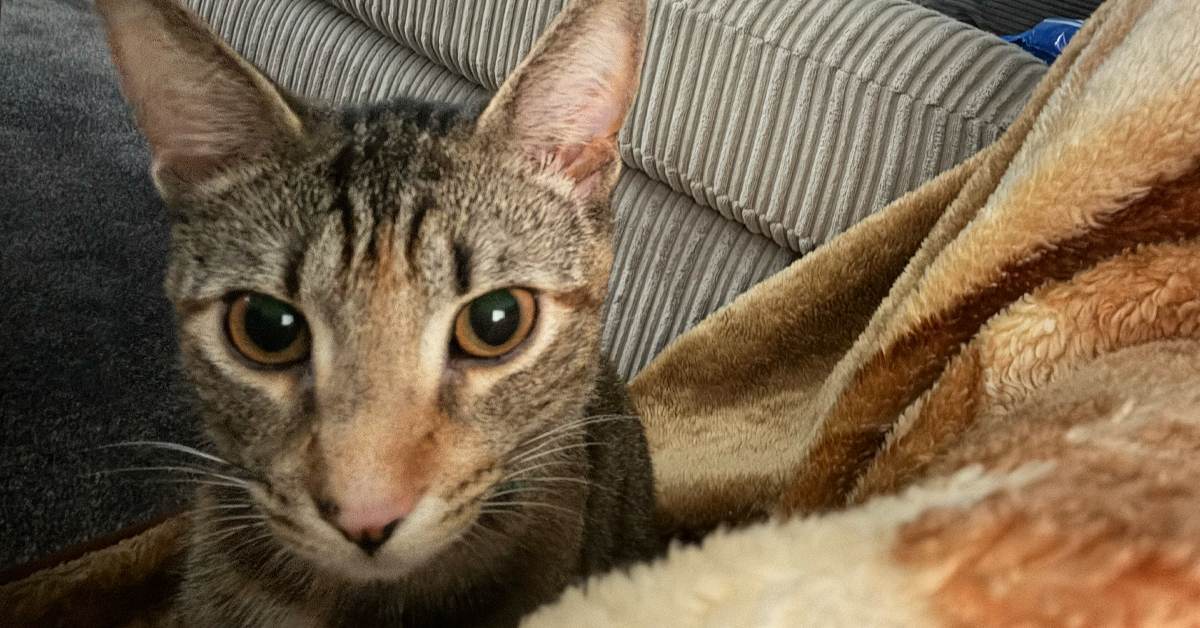 People aren’t clicking on ads the way they used to. Banner blindness is real. The average person sees hundreds of ads a day and consciously registers almost none of them. The ones that get through? They don’t look like ads. Instead, they look like content. They make you laugh, or they catch you off guard, or they’re so specific and weird that you stop scrolling just to figure out what you’re looking at.
Nobody asked to be sold to every thirty seconds.
And here’s Tooth:

See? It stopped you. I hope.
Social media tips for small businesses: why stopping the scroll is harder than it looks
I hate to break it to you, but you are competing with everything. Every brand, every creator, every person your audience follows, every breaking news story, every video of Punch, a baby Japanese macaque, that has no right to be as compelling as it is. I lost fifteen minutes of my life to that monkey and I regret nothing.
Your job, specifically, is to make something that stops the scroll. Not just once. Consistently. Which is genuinely hard when what stopped the scroll last week has already become the new normal by this week.
Things change fast. That’s not a problem to solve. That’s just the environment. Your job isn’t to find the thing that works forever. It’s to keep finding things that work now, and then stay curious enough to find the next thing when now becomes then.
Sometimes that’s a trend. Sometimes it’s a format. And sometimes it’s just a tone that resonates at the right moment. The consistency isn’t in the content. It’s in the attention you’re paying.
And sometimes, just sometimes, they love the old:

How social media brand awareness actually works
TikTok trends work. And not in the way you might think. The ones that really work are the ones where you don’t even realise it’s an ad. Rather than promoting, they’re doing a fun trend, or responding to something, or just being genuinely funny, and it ends up working as brand awareness almost by accident. Almost.
Untamed cat food did something I still think about. An owner cancelled their subscription and, feeling bad about it, told them their cat had died. Untamed, being genuinely lovely, sent flowers and a card to say sorry for their loss. The cat was alive and perfectly healthy. Just, unfortunately, didn’t like their food. Cats are fickle. Trust me, I know.
The owner told the internet, and weirdly it blew up. Thousands upon thousands of likes and comments. Untamed’s social media manager, by all accounts, had a moment that every social media manager dreams of: the team is panicking, and they’re sitting there thinking this is the one. They made a video leaning into the whole situation, the team chaos, the manager barely containing their glee, the very alive cat presumably unaware of all the drama. It wasn’t a trend they jumped on. Instead, it was a reply to an already viral post, handled perfectly by someone who was paying attention and had the instinct to act.
It was brand awareness that didn’t feel like brand awareness at all. It felt like a story. Because it was one.
You can’t manufacture that. You can only be ready for it when it happens, which means having a team or a manager who has the instinct and the trust to act fast. The moment doesn’t make itself. The person watching for it does.
Doom scroll like it’s your job. Because it is
If you’re a social media manager and you’re not scrolling constantly, start. Scroll like your life depends on it. Like, comment, share, repost. The whole shebang. I’m being serious.
The unhinged comment section
How many times have you been scrolling and spotted a big brand commenting something completely unhinged on a video that has nothing to do with them? A heated rivalry fan edit. A video of someone running into a glass door. A thirst trap for a fictional character. And in the comments, there’s a generic pizza brand saying “now this is spicy.” Why are they there? Should they be there? Probably not. But you stopped. You read it. You might have screenshot it. That’s the point.
And then there’s Specsavers commenting on a video of someone walking into a glass door saying “you know what I’m going to say.” That’s funny. We like that. It’s witty, it’s quick, and Specsavers did it on a video with 500 views. 500. Would your boss be mad? Maybe. But people comment, people like, people share. As long as you’re not wading into genuinely controversial territory, you’re fine.
The Love Is Blind situation
The Love Is Blind Netflix live reunion is probably the best example of this I’ve ever seen. It was Netflix’s first live reunion of its kind. It broke. The stream didn’t work. It was, by any technical measure, a disaster. But what happened in the TikTok comments and across social media during the chaos was something else entirely. Brands upon brands were jumping in with their taglines and jokes. Social media managers all over the world, presumably on their personal phones at whatever time it was locally, just went for it.
The HubSpot social media course will tell you to never comment on a competitor’s downfall or take the mick. And generally, I agree. Bad luck is bad luck and it’s not a good look. See what I did there? I’m quite proud of that one. But this wasn’t really that. This was a free-for-all, and everyone knew it, probably including Netflix. The brands piling in with jokes likely took the pressure off, because people were talking about the wild comments more than the failed stream.
The jokey rivalry thing
I also love when companies have a jokey rivalry with each other on social. It’s the enemies-to-lovers arc, but make it corporate. They’re competitors, yes. But they also both know that this back and forth is doing something for their brand awareness. People retweet it. Some people quote it. And some people take sides.
Do you still retweet now that Twitter is X? I deleted the app years ago and I genuinely don’t know anymore.
When two social media managers clock that people are eating up their rivalry and lean into it, it works for both of them. As long as you don’t take it too far, you’re fine.
Just do it
Start commenting, start posting (obviously), start reposting and start liking. What’s the worst that can happen? Yes, things stay online forever. But social media moves faster than me running when I hear the opening of Lord of the Rings playing in the living room.
The formal client (also completely valid)
Your brand voice is valid, whatever it is
Not every client wants to be unhinged in the comments. Some want the professional posts, the thought leadership, the considered and polished content. And that’s completely fine. Every company has a tone, a voice, a set of needs, and it’s your job as their social media person to figure that out and work with it, not against it.
Brands can have a personality that isn’t jokey or fun. In fact, they can be knowledgeable and polished and still connect. There are entire markets of people who respond to that energy. And there are times those cleaner, more corporate posts go viral within an industry, and when they do it’s brilliant. Do I have specific data on why? No. I’m not a social media guru, unlike approximately everyone else on LinkedIn.
Practical social media tips for small businesses with formal brand voices
But I believe it happens because the social media manager has been doing all the heavy lifting in the background. Liking posts. Commenting. Reposting. Messaging people in their industry. Collaborating. All of that builds brand awareness, which builds followers, and eventually shows up in engagement.
If you’re posting the same blank stat on the same background twice a week and doing zero engagement around it, you can’t be shocked when nothing comes back. Like your clients’ posts. Show up in your industry’s feed. If you post because you need to post, people know. They can feel it. And they’ll scroll past.
Mix it up
Just because your client is formal doesn’t mean you need to follow the same cookie-cutter formula for the next year of posts. Mix things up. Review what’s working. Talk to your client, find out how far you can push the brand. You might be surprised.
The part where I’m still figuring out social media, and that’s fine
I have not cracked social media. I don’t think I will, because I don’t think it can be cracked. The second you think you’ve cracked it, the algorithm changes and your cracked thing is now a slightly drafty window letting cold air in.
Stop posting hoping it’ll trend
Seriously, don’t. It’s like watching The Lion King and hoping Mufasa isn’t going to die trying to save Simba. We all know he does. We all hope and pray that maybe, on our 82nd watch, Disney has quietly amended the 1994 film and Scar never pushes him off. But guess what. It happens. We cry. Because we were a fool to have hope for the inevitable. If you post hoping to go viral and you don’t, that’s heartbreak. Heartbreak causes confidence issues, and confidence issues are the last thing a social media manager needs. So stop. Most posts don’t trend and that’s fine. Because social media is weird.
Post what you believe is good.
If it doesn’t do well, dust yourself off and try something else. And don’t write that post off forever either. Just because it didn’t land in April doesn’t mean it won’t work in August. Timing is weird. People are weird. Come back to it.
The posts that work tend to feel like they came from a real person who actually cared about what they were making. The ones that don’t work feel like they were generated by the concept of a brand having a social media presence. People can smell the difference. Their thumbs know before their brains do.
So make something real. Make something specific. Make something that only you, or only your client, could have made. Keep going. Pay attention.
And if you’re a small business looking for someone to figure this out with you, someone equally confused, equally committed, and very honest about both, well. You’re already here.
And if all else fails, get a cat.