

How to not become a miscommunication cliché when working with a designer
Have you ever done a job that seemed so simple it should have taken a week, and then somehow it took three months, nearly twenty amends, and a file called final_FINAL_v6_master_deffo_this_one? And then the end result was… still pretty simple? A leaflet. A logo. A business card. Something that fits on one side of A5.
So why did it take that long?
I have a specific answer to that. I learned it the hard way. And the hard way, in my case, was a leaflet that never got used.
It’s not you. It’s not me. It’s the bit in between.
The design part is usually the easy bit. The hard part is the conversation that has to happen before any of it.
I know that sounds backwards. You’d think the person with the software and the expensive font subscriptions would be the bottleneck. But genuinely, hand on heart, most of the back-and-forth I’ve experienced hasn’t come from bad design. It’s come from unclear briefs. From two people who both had a perfectly clear picture in their heads that turned out to be completely different pictures.
And that’s nobody’s fault.
If you’re a plasterer, and I mean this with complete sincerity, you are brilliant at plastering. You know things about walls that I will never know. I couldn’t skim a wall if my life depended on it. I wouldn’t know where to start. I would genuinely rather watch a four-hour documentary about the history of plaster than attempt it myself. But if you asked me to make you a leaflet and I turned up asking you to brief me properly first, why would you know how to do that? You’ve spent your career perfecting your craft, not learning how to talk to designers.
That’s not a gap in your knowledge. That’s just not your job.
I don’t know how to plaster a wall. You don’t know how to brief a designer. We’re even.

What actually happens when there’s no brief
Client says: “Can you make me a flyer? Something clean, professional, you know what I mean.”
Nope. I don’t know what they mean. But I say yes, because I want to help, and I go away and make something that I think is clean and professional.
Client comes back: “It’s nice but it’s not quite what I was imagining.”
“What were you imagining?”
“Something a bit more… you know.”
I don’t know.
Round two. Round three. Final_v2. Final_REAL_v2. At some point around version six, we’ve both spent twice as long on this as it needed to take and neither of us is having a particularly nice time. The client starts to think maybe designers are difficult. The designer starts to think maybe the client is difficult. And actually neither of us is difficult. We just never properly talked to each other at the start.
The miscommunication romance nobody asked for
You know those books where both characters are clearly made for each other, but one of them always turns up in the wrong place at the wrong time, mishears something, and instead of sitting down and waiting and actually listening, they turn around and start dating someone else in revenge? And the other character watches the love of their life walk off with someone new? And you, the reader, are absolutely screaming at both of them and at the author because WHY. Why is this the plot. Why does nobody just talk.
I genuinely hate the miscommunication trope. It does things to me.
But unfortunately, that is sometimes exactly what a back-and-forth brief situation looks like. Until you and your client have a proper sit-down conversation, you’re both constantly longing for the same outcome but skimming around the edges of it. Maybe even starting to look at other people to work with. The brief is just two people finally sitting down in the same room and talking properly.
Annoying, right? Now imagine doing that daily. As the client and as the designer.
Nobody wants that. Nobody is trying to waste anyone’s time. We both want the same thing: to make the best possible piece of work that actually helps your business. The brief is just how we get there without the detour through version six.
This is so fixable. It is genuinely so fixable.

The leaflet that never got used
I had a client once who came to me with a clear idea. Or what felt like a clear idea at the start.
Nearly twenty amends on a single leaflet. Twenty. Multiple calls, daily emails, changes ping-ponging back and forth every day. Remove this, add this, actually put that back, no wait. The thing is, it wasn’t that they didn’t know what they wanted. They did. But they had a chain of command behind them, and every time I sent something over it went through another set of hands and came back different. Things changed hourly. I wasn’t designing for one person, I was designing for a committee that hadn’t agreed on anything yet.
We got there in the end. They were happy. I was exhausted.
They never used it.
What I actually learned from it
I sat with that for a while. And the conclusion I came to wasn’t that they were a bad client, because they weren’t. It was that neither of us had done the work at the start to figure out who was actually making decisions, what the real deadline was, and what done actually meant. We’d just both hoped it would become clear along the way.
It didn’t. It never does.
And here’s the part that might sound counterintuitive: the hardest bit is the original conversation. But it doesn’t have to be a polished, perfectly structured handover. As a client you don’t need to arrive with all the answers. You don’t need to know the visuals, the layout, the colour palette, or have every word written out. Even if all you know is that you want a leaflet with the headline “tyres half price this summer” and nothing else, that’s somewhere to start. Tell me like you’d tell a friend. Tell me like you’re venting about the miscommunication trope to someone who gets it.
That’s where the designer comes in. We’ll research your brand, your competitors, your customers. We’ll root through everything you give us and figure out the rest. Just give me the brain dump and let me work with it.
What matters isn’t that the brief is perfectly written. What matters is that it’s honest.
Honesty is genuinely underrated in a brief
If you’re honest with your designer, and your designer is honest with you, something good happens. You actually build a working relationship instead of a polite standoff where everyone is pretending to be fine.
“I want the design to have a giant pink balloon because that’s a symbol commonly used in our industry.” That’s useful. I didn’t know that, but now I’ll look into it and work with it rather than quietly removing it because I thought it was a random request.
And it goes both ways. Don’t design something you know won’t work just to move things along. Don’t use a design you hate just because you paid for it. If you’re five amends in and something feels fundamentally wrong, say so. Take a step back. Look at everything. It’s easier to fix at amend five than at amend nineteen when everyone is tired and the leaflet is going to end up in a folder somewhere, never used.

How to brief a designer (the actual bit)
I’m 25. I haven’t hired a creative person in my life. But I have been the creative person, hundreds of times, and I know exactly what information makes the difference between a smooth project and a Final_REAL_v2 situation.
Think of it like buying a house. You wouldn’t buy the first one on Rightmove that was in your budget. You’d book some viewings, check the measurements, look at the energy rating, count the rooms, walk around the neighbourhood, get people’s opinions. You’d do some digging. You wouldn’t just click buy.
You shouldn’t just click design either. Be eager, jump in, yes. But this is a new pool and you’re not sure how deep it is. Grab a pool noodle and sink in slowly. Chances are it’s not that deep.
Here’s what I’d want you to bring with you.
Start with the what and the why, not the how
“I need a leaflet” is a what. “I need something I can leave on the counter at the gym so people know I do sports massage in the area” is a what and a why. The second one tells me everything: the format, the audience, the context, the tone. You haven’t told me what colour to make it, but you don’t need to. I can figure out the rest from there.
Tell me who’s going to see it
This is the one that changes everything and almost nobody thinks to include it. A leaflet for a 60-year-old homeowner in Mold looks different to a flyer for a 25-year-old at a car meet. Not because one is better than the other, just because design talks to people and it needs to speak the right language.
Tell me who’s signing it off
And I mean everyone. If there are three people who need to approve this before it goes anywhere, I need to know that upfront. Not because it changes the design, but because it changes the timeline, the number of rounds, and how I structure feedback. The leaflet that never got used taught me this one specifically.
Tell me what you like, even if you can’t explain why
“I like how [brand] looks” is genuinely useful. “I like that Innocent Smoothies thing where they write on the bottle like a person” is useful. “Something a bit like the NHS website but less blue and less scary” is useful. You don’t have to know the design language. I do. Give me the feeling and I’ll do the translation.
Tell me what you hate
This one is so underrated. “Nothing too pink.” “Don’t make it look cheap.” “I don’t want it to look like a dentist’s waiting room.” Brilliant. That’s three things I know to avoid before I’ve even opened anything. Negative briefs are briefing. They absolutely count.
Tell me everything that needs to be on it. Everything.
Phone number, website, email, address, tagline, accreditation logos, social handles, registered company number if relevant. All of it. The number of times I’ve sent a final file and then got a message saying “oh can you add the Instagram” and it turns out the Instagram handle doesn’t fit where I put the phone number and now the whole layout needs rethinking… a list at the start would have prevented all of that. Write the list. Send the list. Save everyone.
Tell me your deadline. Your actual deadline.
If you need it for a show on the 15th, tell me the 15th, not the 20th “just to be safe.” If I think I have until the 20th and you actually needed it for the 15th, we’re going to have a bad time. I’d rather know the real date and manage accordingly.

The one question that changes everything
If I could only ask one thing before starting, just one, it would be this:
What does success look like?
Not “what should it look like.” What does it mean for this to have worked? If it’s a flyer, is success that people pick it up? That people call the number on it? That you stop feeling embarrassed handing it out? If it’s a logo, is success that it looks good on Instagram, or that it prints well on a van, or that your mum finally thinks your business is legitimate?
All valid answers, by the way.
Success isn’t always the trendiest option
When I know what success looks like, I’m designing towards something real. And sometimes that means the answer isn’t the coolest or most on-trend piece of design you’ve ever seen. Sometimes success comes from the most corporate-looking flyer in the room, because that’s what your audience responds to. Work with that, not against it.
Don’t give the client a Bratz doll when they needed a Rubik’s cube.
And maybe, just maybe, make something that actually gets used.

Now you’ve got the brief. Here’s how to give feedback that actually helps.
You’ve done the hard bit. You’ve briefed properly, you’ve been honest, you’ve sent the brain dump. The designer has gone away and made something. And now it’s come back and you need to respond.
This is where a lot of projects quietly fall apart. Not because the design is bad. Because the feedback is vague.
“Yeah it’s ok I just don’t feel it” is not feedback. I mean it nicely, but it isn’t. It tells me nothing about what to change, what to keep, or what direction to go in. And so I’ll make a guess, send something back, and we’re in the miscommunication trope again.
Take a day if you have one
Don’t rush into a reply the second it lands in your inbox. Sit with it. If you have a printer, print it out and annotate it with a red pen like a school teacher marking your Welsh homework. Something about seeing it on paper rather than a screen makes the feedback clearer, I promise.
And when you do come back to it, think in terms of two stars and a wish. Two things you like, one thing you’d change. Then build from there. It’s the same thing we did in school and it works just as well now, because it forces you to find what’s working before you go straight to what isn’t.
Ask for opinions but don’t let them take over
It’s completely fine to show the design to people you trust before you respond. Get a second opinion. Get a third. But remember: your nan’s brother’s next-door neighbour doesn’t need to love it if they’re not your customers. You can’t please forty people and end up with something that actually works. The only opinions that matter are yours, the company’s, and your actual customers’. Everyone else is bonus noise.
Be specific about what isn’t working
If you don’t like it, that’s completely fine. Designers aren’t precious people who will crumble if you hate something (some might). We genuinely want to get it right. But “I don’t like it” on its own leaves me with nothing to work with. “I don’t like it because it feels too cold and I wanted something warmer” is everything. “I don’t like the font, it feels too formal for our audience” is everything. “The colours aren’t quite right, here’s a reference I love” is everything.
Send a detailed doc with your amends. Add links or screenshots of things you like. Suggest imagery if something’s coming to mind. The more specific you are, the faster we get to something you’re actually happy with.
And if you love it? Obviously tell us. We need to hear that too. Please, I beg, tell us you love it.
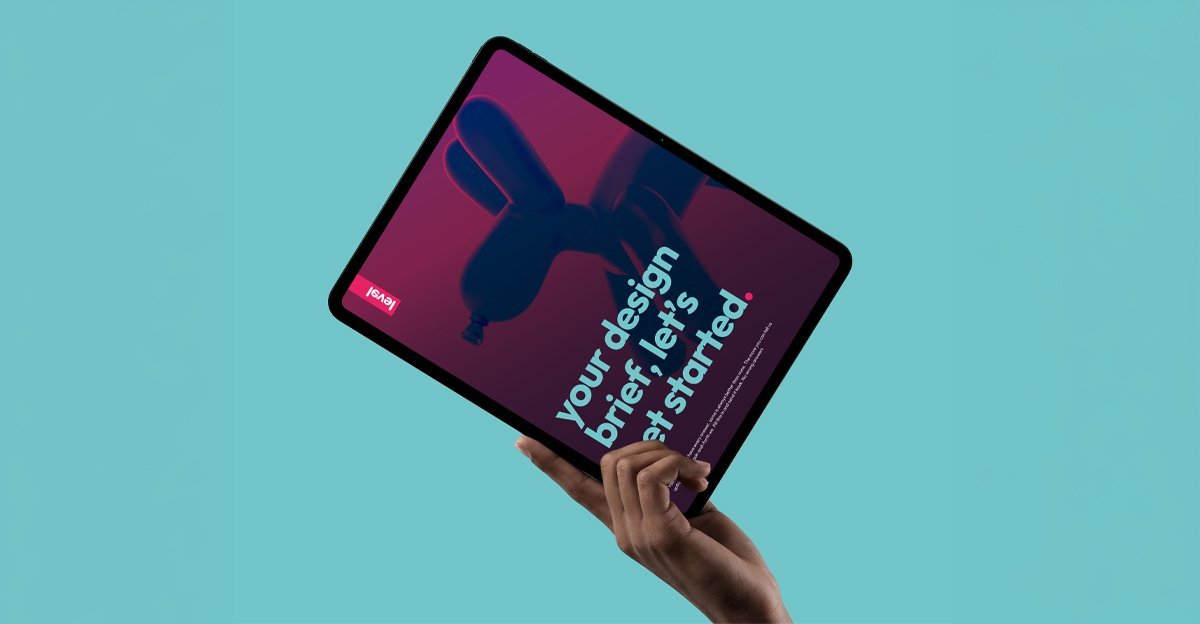
Here. I made you something.
Because I’ve been on the receiving end of enough blank-page briefs to last several lifetimes, I made a simple template. It’s the questions I now ask every client before we start, laid out so you can fill it in and send it over before we even have a first conversation.
You don’t have to have every answer. Some are better than none. You can still win a chess match with the bare minimum pieces. Actually, I don’t know how to play chess. But the point stands.
It’s not long. It’s not complicated. It’s just the stuff that means we spend our time making something good instead of going round in circles on version nineteen of a file called deffo_final_master_v3_THISONE.
Download the free design brief template → HERE
No email required. No newsletter. Just a PDF you can fill in and send.
If you’ve ever felt like you couldn’t quite explain what you wanted and somehow that became your fault, it wasn’t. You just needed someone to ask you the right questions first.
And if you’ve ever been the designer sitting there with a finished file and a client who went quiet… yeah. Me too. That’s why the template exists.
Remember: you can always find the love of your life if you communicate properly.
Suck it, miscommunication.